

Since the adoption of the European Union’s Generalised Scheme of Preferences Plus (GSP+) in January 2014, Pakistan’s human rights framework has remained a catalyst in the review cycles and in legislative and institutional reforms. The GSP+ arrangement links trade with 27 international conventions, including the Convention on the Elimination of Discrimination against Women (CEDAW), which places gender equality at the core of Pakistan’s international commitments. The World Economic Forum’s Global Gender Gap Report 2026, in its 20th edition, now places Pakistan at 143rd out of 145 countries, with a score of 59.5pc.
Since 2021, Pakistan has climbed ten places and closed nearly four percentage points of its gender gap over five years, the best five-year run the country has posted since the index began tracking it in 2006. That is worth stating plainly before anything else. But anyone who has followed this report over the years also knows better than to read a five-year gain without asking what lies underneath it. What lies underneath, in this case, is a mixed picture, one that reflects both real institutional effort and the limits of what that effort has so far been able to reach.
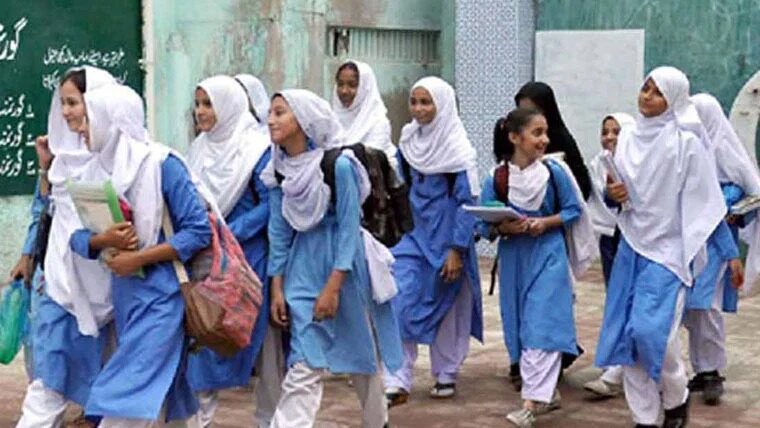
Education. The report’s most recent breakdown, comparing 2025 to 2026, records a genuinely remarkable achievement. Pakistan’s tertiary education enrolment gap has closed completely on that single measure. Educational attainment overall rose to 91.7pc from 85.1pc. For a country so often described, not unfairly, as failing its girls, this is worth sitting with for a moment. Something is working. More Pakistani women are reaching university than ever recorded before.
Economic participation. Economic participation and opportunity, the pillar that determines whether all this education translates into anything resembling independence, remains Pakistan’s weakest score by a wide margin, at 144th out of the 145 economies covered this year, even after a rise to 36.4pc from 34.7pc in the most recent year measured. Since 2021, this is the pillar where Pakistan’s five-year progress has been least convincing. Women’s estimated earned income, their presence among managers and legislators, and their basic participation in the labour force all need to push harder. One indicator did move meaningfully: the share of women in professional and technical roles, up to 0.449 from 0.358 previously, a small but genuine gain.
This is not a uniquely Pakistani problem. Saudi Arabia has spent over a decade producing university classes that are roughly half female, yet its female labour force participation rate has hovered around 20pc, according to research from the King Abdullah Petroleum Studies and Research Centre, a fraction of the male rate. Analysts at the Middle East Institute have pointed to a straightforward mismatch between what universities produce and what labour markets are prepared to absorb. Pakistan’s economy and social structures differ considerably from the Gulf states, but the underlying lesson applies here too. A closing classroom gap does not automatically close the workplace gap. It has to be pursued on its own terms.
Political empowerment. Political empowerment tells a story that is genuinely more encouraging than it appeared in 2021. Pakistan’s score rose to 14.1pc from 11pc over the past year, and this was not left to chance. It followed a specific institutional intervention. The Parliamentary Gender Mainstreaming Committee had directed the Ministry of Human Rights to treat improved political representation and reporting as a priority area, and the ministry’s Secretary, Abdul Khalique Shaikh, has been credited with taking that direction forward, pushing for the kind of coordinated reporting and follow-up across departments that this index tends to reward. The improvement in parliamentary representation, up to a global rank of 91st from 113th, reflects that effort as much as it reflects the underlying reserved seats mechanism itself.
Pakistan’s score for women in ministerial positions moved from 0.000 to 0.036, which still needs effort. A parliamentary seat and a cabinet portfolio are different kinds of authority, and the report treats them as separate indicators for exactly that reason. Rwanda offers a useful point of comparison, not as a template Pakistan can simply copy, but as an illustration of how far a reserved seat can travel when institutions build on it deliberately over time. Rwanda’s 2003 constitution reserved 30pc of parliamentary seats for women after the 1994 genocide. Rwandan legislators did not stop at the quota. Women now hold close to 60pc of seats in the lower house, among the highest shares of any parliament in the world, and used that presence, built up over two decades, to rewrite inheritance and property laws that had shut women out for generations.
There is also the matter of history, which this index measures whether we like it or not. Bangladesh’s political empowerment score of 0.509, more than three times Pakistan’s, rests substantially on fifty years of data reflecting a female head of state. Pakistan had one too, twice over, in Benazir Bhutto. That history has not carried the same weight in the numbers, a reminder that a single term, or even two, is not the same as a sustained institutional pattern, and that Pakistan’s own five-year gains since 2021 will need to be built into something similarly durable if they are to matter over the long run.
None of this should be read as a dismissal of what has been achieved since 2021. The tertiary education numbers, the rise in professional and technical participation, and the parliamentary gain secured through the Gender Mainstreaming Committee’s direction to the Ministry of Human Rights are all real, and all deserve to be credited to the people who pursued them. The honest reading of this five-year record is not that Pakistan has failed, but that it has succeeded unevenly, climbing ten places overall while its economic participation and ministerial representation scores have barely moved from where they stood in 2021. The ministry’s own systematic approach, having shown it can move a number when it focuses on one, now has a clear list of where to focus next.