

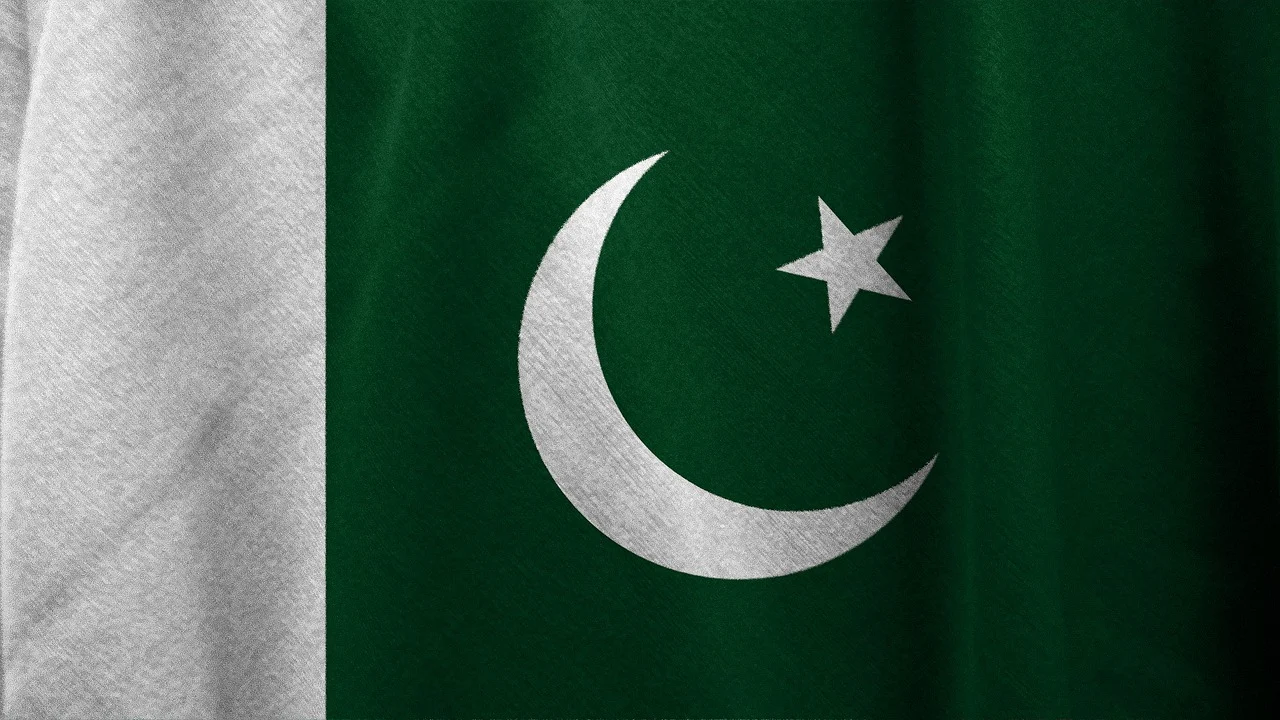
ISLAMABAD — Pakistan’s roughly 2 to 3 million Christians — an estimated 1.6 to 2 per cent of the country’s 240 million people — sit at the centre of a growing debate between Brussels and Islamabad over religious freedom, one that pits genuine institutional progress in Pakistan against persistent, well-documented abuses.

The Maria Shahbaz Case
The debate sharpened in July 2026, when the European Parliament adopted a resolution on the case of Maria Shahbaz, a 13-year-old Christian girl from Lahore who disappeared in July 2025. Her family says she was coerced into converting to Islam and marrying a much older Muslim man. Although documents showed Maria was still a minor, a court ruled in February 2026 that she should remain with the man accused of abducting her — a decision MEPs condemned, calling on Islamabad to guarantee her immediate protection, ensure a fair legal process, and enforce its own laws against child marriage, abduction and forced conversion.
The case is not isolated. Reliable statistics are scarce, but human rights activists estimate that around 300 Hindu and Christian girls are subjected to forced conversion each year, with the true figure likely higher due to gaps in reporting. The Centre for Social Justice’s Human Rights Observer recorded 68 such cases in 2024 alone — 47 Hindu and 21 Christian.
EU Leverage Through Trade
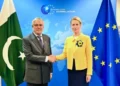
Europe’s concern carries real weight because of Pakistan’s GSP+ trade status, which granted the country roughly €732 million in tariff exemptions last year — equivalent to about 9 per cent of its €8.3 billion in exports to the EU in 2024. A European Commission monitoring report covering 2023–2025 flagged continuing discrimination against religious minorities, vague provisions in blasphemy and cybercrime laws that can be used against “dissidents, human rights defenders, journalists, minorities and ordinary citizens,” and a rise in enforced disappearances — while warning that eligibility under the revised framework effective January 2027 will require measurable improvement.
The Other Side of the Ledger
Yet the same EU report acknowledged notable steps forward — an important counterweight to the more critical headlines. Brussels praised the National Commission for Human Rights as an important institution for advancing Pakistan’s human rights obligations, and cited the legislation establishing a National Commission for Minorities, the narrowing of the death penalty’s scope, a continued de facto moratorium on executions, implementing rules under the Anti-Torture Act, a Domestic Violence Bill for the Islamabad Capital Territory, and the country’s first-ever conviction for marital rape.
Pakistan’s constitutional framework, too, provides a foundation worth noting. The 1973 Constitution reserves ten seats for non-Muslim minorities in the National Assembly (with further reserved seats in provincial assemblies), guarantees freedom of religion under Article 20, and the 18th Amendment of 2010 devolved powers that have enabled provincial-level protections — such as Sindh’s 2013 law safeguarding minority religious properties. Courts have also delivered landmark rulings, including the Supreme Court’s 2014 judgement (Suo Motu Case No. 1 of 2014) directing the government to protect places of worship and establish a special task force for minorities, and the acquittal and release of Asia Bibi in 2018–19, which demonstrated that due process can ultimately prevail even in the most charged blasphemy cases.
On the civic calendar, Pakistan marks National Minority Day each August 11 — commemorating Muhammad Ali Jinnah’s founding pledge of equal citizenship — and the federal and provincial governments run minority welfare programmes, scholarship schemes and job quotas, including a 5 per cent employment quota for minorities in the public sector. Leaders at the highest level regularly reaffirm these commitments, with the president stating during Easter celebrations this year that minorities’ contributions to the country are an integral part of the national fabric.
The Road Ahead
The gap, as diplomats in Islamabad privately concede, lies less in law than in enforcement. Pakistan has built a scaffold of institutions and statutes that many of its neighbours lack; the test — for the GSP+ review ahead of 2027, and for the country’s own constitutional promise — is whether cases like Maria Shahbaz’s become the exception rather than the pattern. For now, Brussels is watching, and both governments have reason to keep the dialogue, and the trade, intact.