

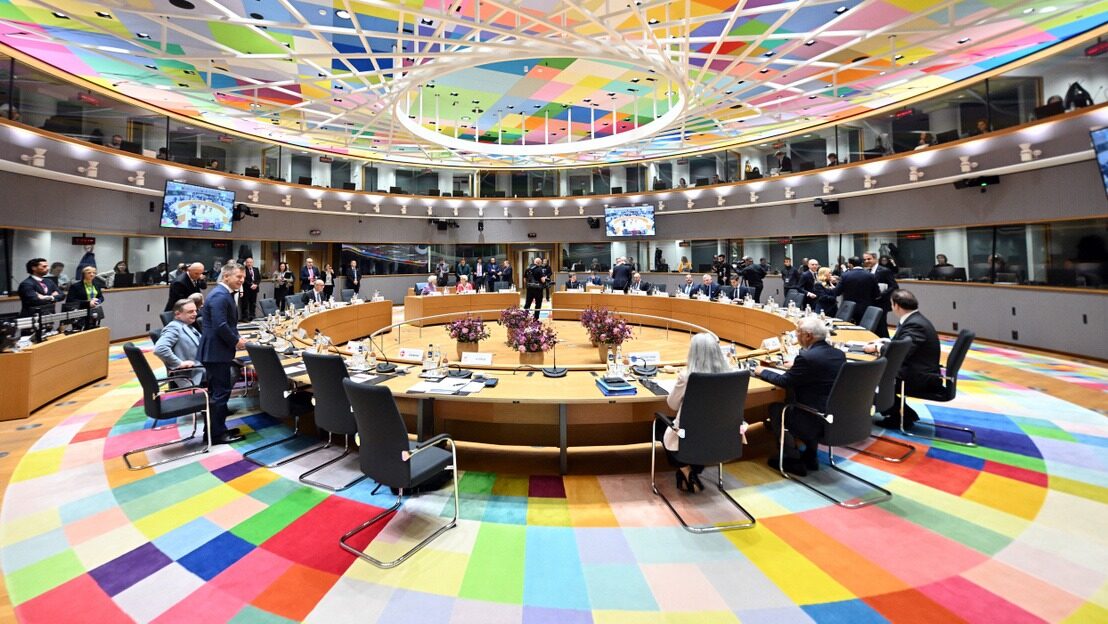
Despite European Council President António Costa’s hopes that an extraordinary EU summit would enable national leaders to make a breakthrough in negotiations on the EU budget, the meeting ultimately ended without an agreement. Rather than bringing positions closer together, several heads of state and government said that the divisions had actually widened. Moreover, during the smaller working-group discussions, the net contributor countries eventually stopped taking part altogether. The second day of the summit was ultimately cancelled. In addition to the budget, member states also failed to reach an agreement on the €45 billion loan intended for Ukraine, meaning that this issue, too, will be left for the December summit. Member states are already preparing for that meeting on the assumption that it may last longer than the planned two days.
The only decision taken that day was to recommend Spain’s Pablo Hernández de Cos as the successor to Frenchwoman Christine Lagarde, who is due to leave her position at the helm of the European Central Bank on 7 February. Member states also nominated France’s Laurence Boone and Germany’s Markus Brunnermeier to the ECB’s Executive Board, although these appointments had already been discussed beforehand.
Costa and von der Leyen subsequently divided the member states into a total of five separate groups, which continued the budget negotiations in smaller working sessions. However, these discussions produced no meaningful progress, as the opposing positions had become entrenched and neither side was willing to make concessions in favour of the other. In fact, the so-called frugal countries eventually stopped attending the smaller working-group meetings altogether.
The groups included a mixture of frugal countries (also described as modernisers or proponents of a more rational approach to spending) and countries supportive of cohesion policy. Several diplomats from the frugal camp accused Costa, speaking to journalists at the summit, of trying to undermine their united front by organising the discussions in this way. Austrian Chancellor Christian Stocker made a similar accusation. To ensure that this would not happen, several frugal countries ultimately refused to attend some of the working-group meetings, explaining that they had already made their positions clear and that the smaller discussions would not bring the negotiations any closer to an agreement anyway.
At the remarkably brief press conference concluding the summit, which lasted just eleven minutes, Costa assessed the situation by pointing out that seven countries wanted to reduce the budget further, while 17 member states opposed further cuts. The challenge, he said, was to find a compromise between these two positions.
He did not consider the summit a failure. Instead, he sought to present the lack of an agreement, as well as the frugal countries’ withdrawal from the discussions, in a more positive light, arguing that the smaller working-group consultations had been useful because they had given him a clearer picture of what kind of proposal might ultimately secure an agreement in December.